$20.00
We will hold your cart for 15:00.
Nearly every dead portable power station we hear about shares the same story. It wasn't a faulty cell or a bad inverter — it was six months in a hot garage at 100% charge, or a winter in a shed at zero percent. Lithium batteries are remarkably durable, but only if you store them correctly and catch small problems before they become expensive ones.
This guide is the maintenance routine we recommend to campers, van owners, and home-backup users: how to prepare a power station for storage, what temperature and charge level to aim for, how often to check on it, and how a proper battery monitor takes the guesswork out of the whole process. Nothing here requires an engineering degree — just about an hour, twice a year.
Lithium chemistry degrades fastest when it's parked at the extremes. A battery held at a full charge while warm ages measurably faster than one sitting around 50–60%. At the other end, letting a battery self-discharge to empty over months can drop cell voltage low enough to cause permanent damage — and on some packs, a true zero-volt condition means the battery management system will refuse to charge it at all.
The practical takeaway: for any storage longer than a few weeks, bring your power station to roughly 50–60% state of charge, power it fully off (not standby), and store it somewhere dry and temperature-stable. Indoors beats a garage; a garage beats a shed that freezes and bakes.
The same rules apply to smaller gear. Power banks, USB flashlights with built-in cells, and two-way radios with rechargeable packs all age the same way — just in smaller increments.
Twice a year — we suggest the daylight-saving clock changes as an easy reminder — run through this:
If your setup includes hardwired components — solar charge controllers, distribution hardware, vehicle integrations — add a visual check of every terminal for tightness and heat marks while you're at it.
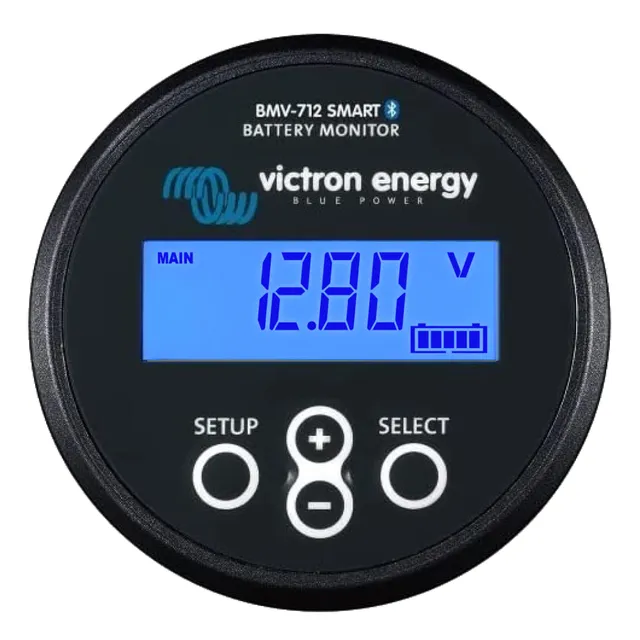
Voltage is a terrible way to judge a lithium battery's health. Lithium cells hold their voltage nearly flat across most of their discharge range, which means a pack showing "12.6V" can be anywhere between 90% and 30% full. If you're running a permanent battery bank — in a van, RV, cabin, or backup setup — a shunt-based battery monitor is the single most valuable diagnostic you can own.
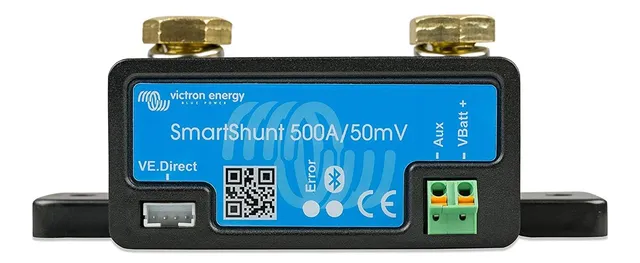
A shunt sits on the negative side of your battery bank and counts every amp in and out, giving you a real state-of-charge reading, live current draw, and accumulated cycle data. If the unit consistently shows less capacity than it used to, you know it's aging. If it shows a parasitic draw when everything is "off," you've found the thing that will flatten your bank in storage.
Which to choose? The SmartShunt is the clean install: no display to cut a hole for, everything read through the VictronConnect app on your phone. The BMV-712 gives you an always-on wall-mounted display plus an AUX input you can wire to a second voltage source — handy for watching a starter battery or a mid-point voltage. Both use the same shunt-based counting method and both are Bluetooth-enabled out of the box.
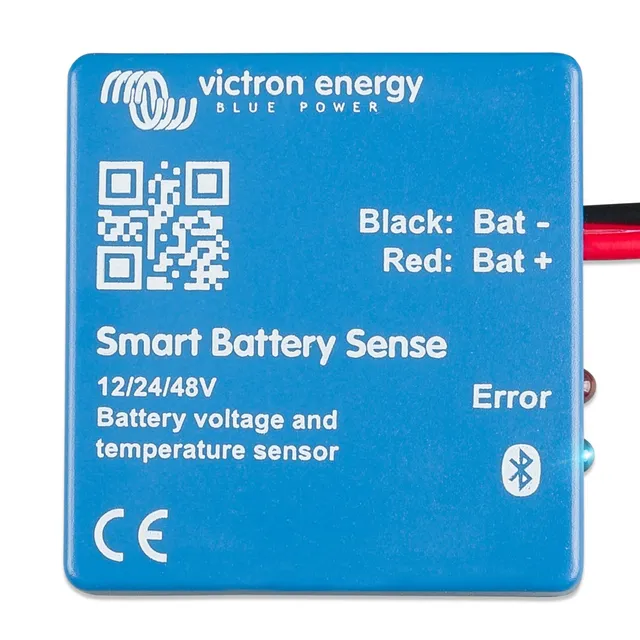
One more monitoring layer worth adding: temperature. Charging lithium batteries below freezing causes permanent lithium plating on the cells, and most built-in BMS units will block charging when they detect it — but only if they actually know the temperature. A wireless battery temperature sensor paired to your charge controller closes that gap, especially for banks in unheated spaces.
Panels and charge controllers are famously low-maintenance, but "low" isn't "none." Twice a year:
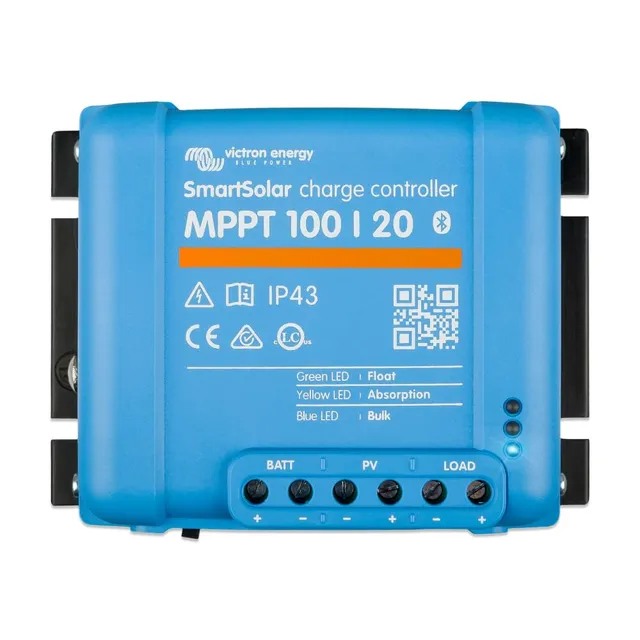
If you're sizing or upgrading a permanent solar setup around a 48V bank, a controller like the SmartSolar MPPT 100/20 48V handles up to 100V of panel input at 20A of charge current — enough for a substantial array on a properly sized bank, with full Bluetooth configuration and monitoring through VictronConnect.
Run this routine and your power station should still deliver close to its rated capacity after a year of storage-and-seasonal use, with only single-digit degradation. Your monitor's history should show a stable full charge, no mystery parasitic loads, and charge times that haven't crept upward. If any of those drift — capacity down more than ~15% in the first year, charge times way up, or the unit shutting down early under load — address it now, while it's still a warranty claim or a cable swap instead of a dead battery.
Battery care isn't glamorous, but it's the difference between gear that's ready when you need it and gear that's an expensive paperweight. Set a calendar reminder for the clock change, keep a monitor on the bank, and your batteries will quietly outlast everything else in your kit.
Orders over $45.00 ship free. Otherwise, shipping is $8.00.
Hassle-free returns
SSL encrypted checkout
100% genuine products
Portable power stations, inverters, and solar gear from Goal Zero, Victron Energy, and Cobra — clear specs, fair prices, real support.
Email: support@powerhaven.shop
Address: 1420 Ridgeline Avenue, Suite 300, Reno, NV 89502, United States